
This lizard drinks through its skin. The thorny devil — a small Australian desert lizard armoured head to tail in spikes — never needs to bend down to a puddle. Its scales are separated by a network of grooves, and any water that touches its body is pulled along those channels by capillary action, travelling across its skin until it reaches the mouth. Rain, dew, damp sand: all of it is a drink delivered by plumbing.
Meet it in the Field Guide
The thorny devil opens Wren's Field Guide, Vol. 1 — the first of the 12 strangest real animals in the book.
See the Field GuidePlumbing, worn outside
The trick is in the gaps. A thorny devil's scales don't meet flush — between them runs a mesh of tiny grooves. Touch water anywhere on the animal and surface tension takes over: the grooves wick the water along, scale to scale, in one direction that matters — toward the mouth. The lizard doesn't lap, suck, or scoop. It stands still and lets its skin deliver the drink. (This is the fact Wren's Field Guide quiz puts to its readers — and the answer is the skin, every time.)
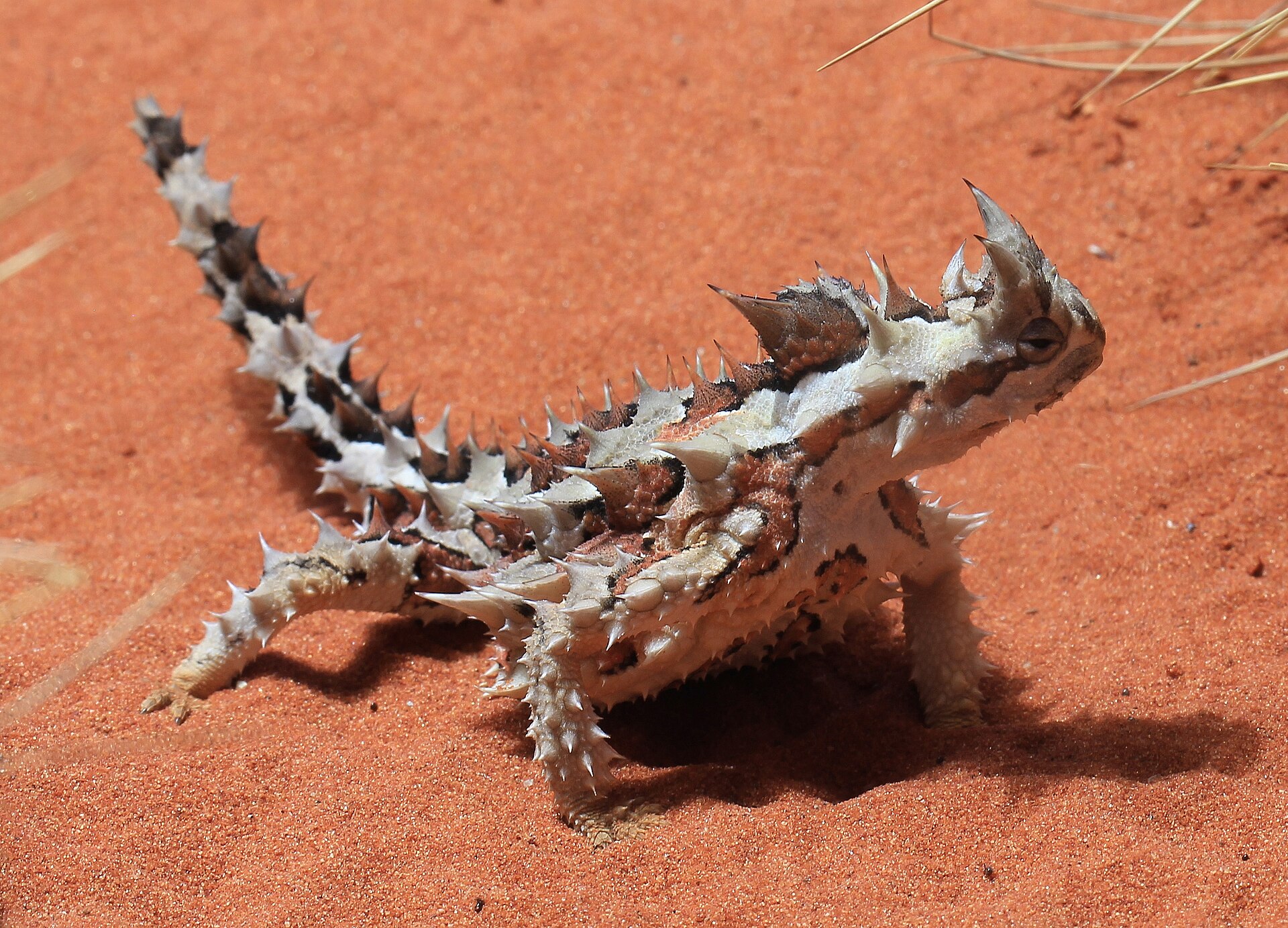
Key facts — the Thorny Devil
- The animal: the thorny devil (Moloch horridus), a small desert lizard of Australia.
- The armour: conical spikes cover its whole body.
- The drinking trick: grooves between its scales pull water by capillary action from anywhere on its body to its mouth.
- The sources: any water counts — rain, dew, or damp ground against its feet.
- The claim to fame: the thorny devil is animal #1 in Wren's Field Guide, Vol. 1.
Built for a dry country
Desert animals survive on engineering, and the thorny devil carries two systems at once. The spikes make it a mouthful no predator wants — a lizard that looks like a cactus with legs. The skin-plumbing solves the other desert problem: water that never collects anywhere. In country where a puddle is an event, a lizard that can drink dew through its feet has rewritten the rules.
Why it leads the Field Guide
When Wren's Field Guide picked its twelve strangest real animals on Earth, the thorny devil went first — before the platypus, before the axolotl. It's the whole Wren idea in one small lizard: an animal that looks invented, doing something that sounds impossible, that turns out to be simple physics wearing spikes.
Frequently asked questions
How does a thorny devil drink?
Through its skin. Grooves between its scales wick water by capillary action from anywhere on its body along to its mouth — so rain, dew, or damp sand against its feet all become a drink.
Where do thorny devils live?
In the deserts of Australia — this one was photographed near Alice Springs, in the red centre of the continent.
Why is the thorny devil covered in spikes?
The conical spikes are armour: they make the small lizard a painful, awkward mouthful for predators. The famous trick, though, is between the spikes — the water-carrying grooves.
Keep exploring
- 🦎 Panther Chameleon: The Tongue Faster Than a Sports Car
- 🦎 Axolotl: The Salamander That Regrows Its Brain — a fellow Field Guide animal
- 📖 10 Rare Animals You've Never Heard Of