
These adorable bugs are hiding a secret. The round red adult is the garden's favourite neighbour — but its baby is a spiky monster that looks like a tiny alligator, hunts aphids by the hundred, and bleeds bitter poison from its knees when something touches it. Cute? This case file argues the ladybug is a weapon.
Watch the investigation
The "Ladybugs Are Terrifying" Short is live on the channel — the adult opens it, then the alligator gets revealed.
Watch on YouTubeThe baby looks nothing like the parent
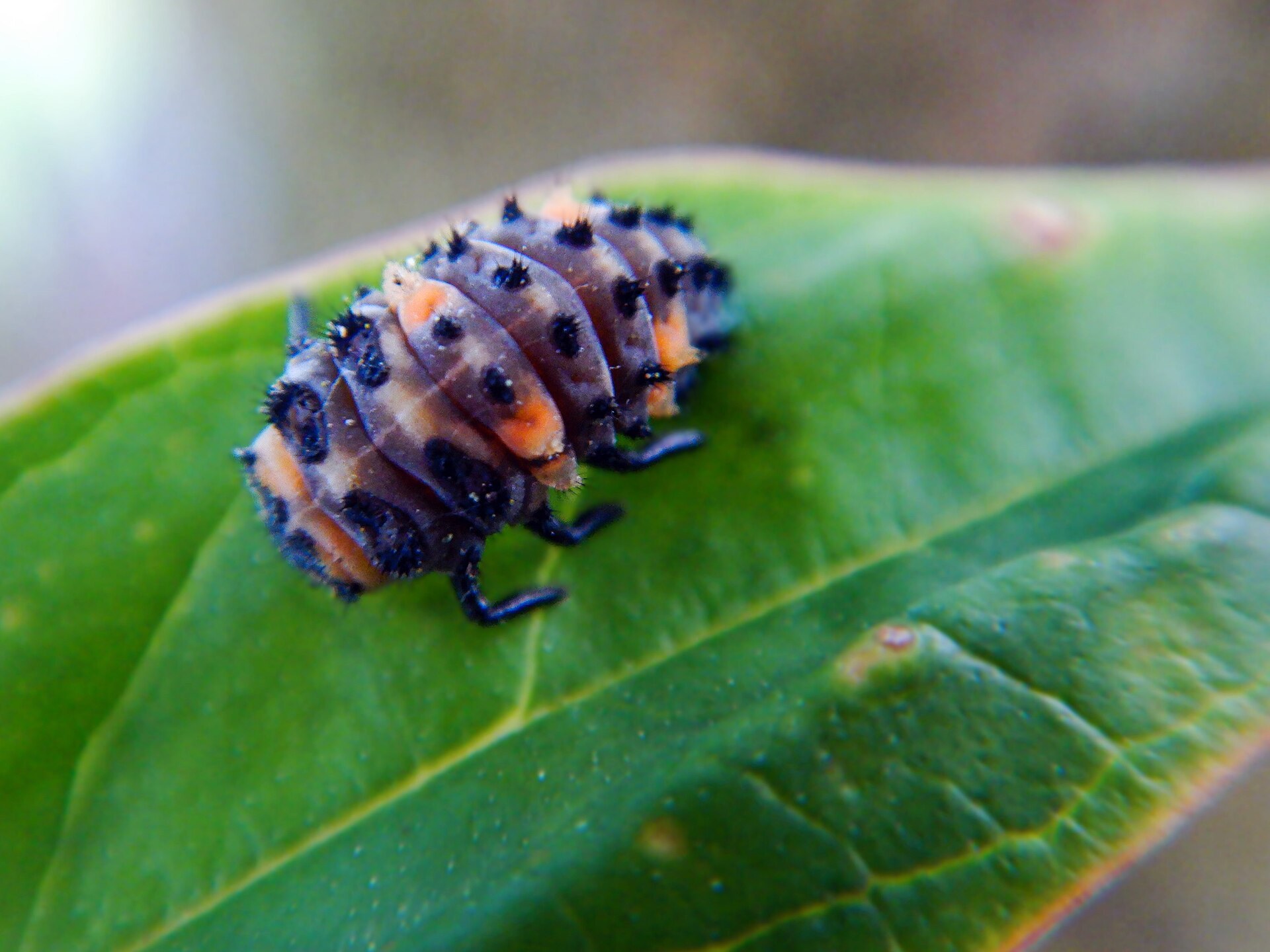
Start with the identity problem. A ladybug larva is dark and alligator-like — that's not Wren exaggerating; it's how Cornell's biocontrol guide describes them: elongated, grey-black bodies with yellow or orange bands, carried on three pairs of prominent legs. No dome, no spots, no red shell. If you found one on a rose stem you'd never file it under "ladybug." That disguise is the whole opening of this case: the most famous beetle in the garden spends its childhood as something that looks like it crawled out of a monster movie.
Key facts — Case File #123
- The animal: the ladybug (lady beetle), in its larval stage.
- The larva: dark and alligator-like, spiky, with three pairs of prominent legs — unrecognisable as a ladybug.
- The appetite (larva): one larva eats ~400 medium aphids before pupating.
- The defence: reflex bleeding — a disturbed lady beetle oozes a toxic, bitter chemical from its leg joints.
- The appetite (adult): one adult may eat 5,000+ aphids in its lifetime.
Four hundred aphids before it grows wings
And the alligator is hungry. Ohio State's extension research puts one larva's pre-pupation total at around 400 medium aphids — hunted on foot, one stem at a time, before it has wings, before it has the famous shell, before it looks like anything you'd put on a greeting card. Touch it mid-hunt and you meet the second defence: reflex bleeding. Disturbed lady beetles ooze a toxic chemical from their leg joints — the script for this case called it "bleeds bitter poison from its knees," and that's a fair plain-language translation of the femoro-tibial joint doing exactly that.
Grown up, it's a 5,000-aphid weapon
Then the monster pupates, and out walks the postcard. Same hunter, better PR. The adult keeps eating: one ladybug may take more than 5,000 aphids in its lifetime, which is why gardeners love them — every ladybug is a pest-control service that works for free. So the verdict of Case File #123 stands. The adult is adorable. The baby is an alligator. And both of them are weapons the garden is lucky to have. Did you know a baby ladybug looked like that — or is this the first time you've ever seen one?
Frequently asked questions
What does a baby ladybug look like?
Dark and alligator-like — an elongated, spiky, grey-black body with yellow or orange bands, on three pairs of prominent legs. Nothing like the round red adult.
How many aphids does a ladybug eat?
Around 400 medium aphids for one larva before pupating — and more than 5,000 across one adult's lifetime.
Why do ladybugs bleed from their knees?
Reflex bleeding: when disturbed, a lady beetle oozes a toxic, bitter chemical from its leg joints. It's a defence — one taste is the lesson.
Keep exploring
- 🐞 Mantis Shrimp: The Punch That Boils Water — another small animal with an outsized weapon
- 🦎 Panther Chameleon: The Tongue Faster Than a Sports Car
- 🦩 10 Rare Animals You've Never Heard Of — the field-guide list