
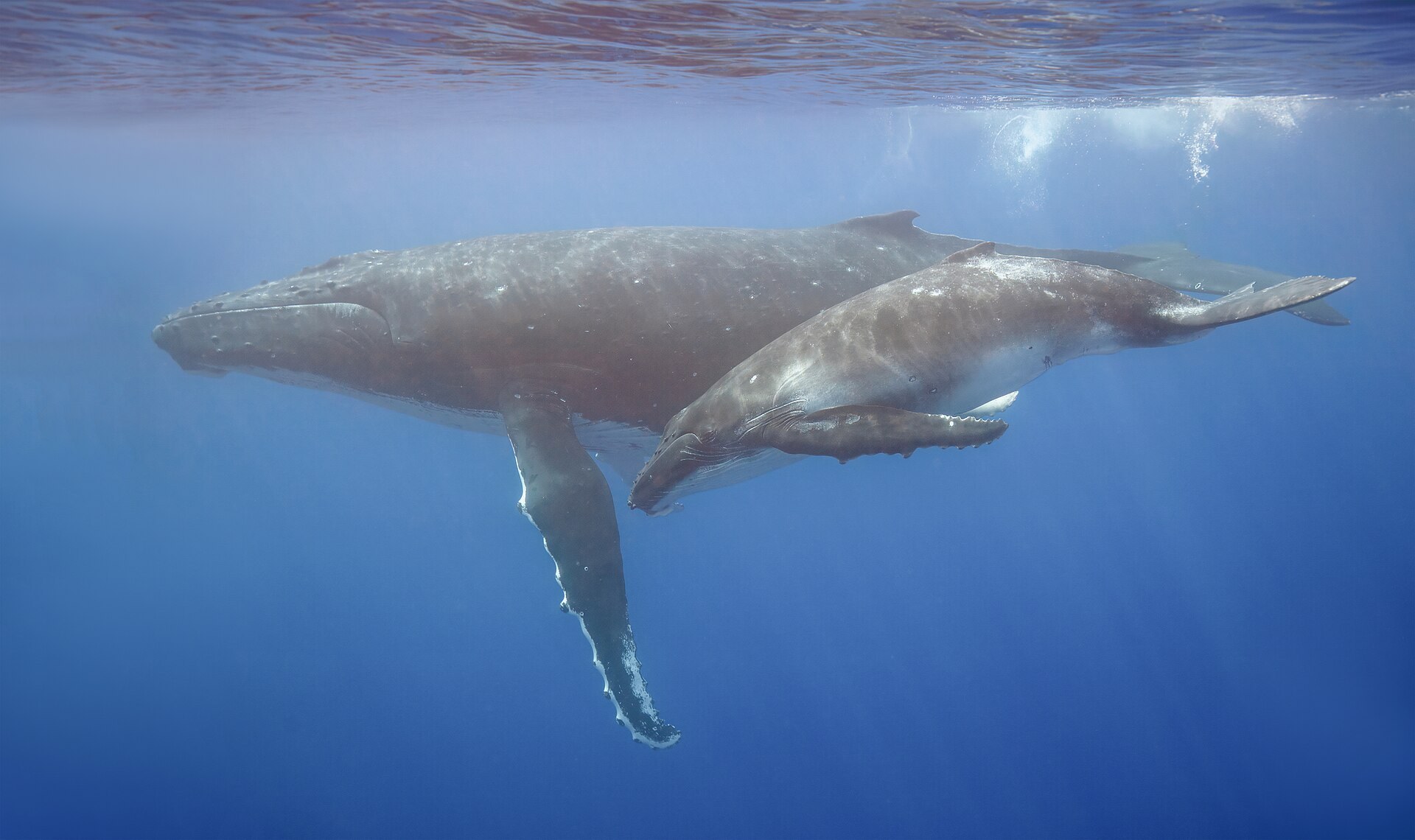
This whale waves the longest arms on Earth. A humpback's flippers run fifteen feet long — a full third of its body — which makes them the largest limbs in the entire animal kingdom. And did you know? Its tail is eighteen feet wide, and one slap from it echoes for hundreds of metres underwater. But the fact that closes this case file is the quiet one: a humpback baby is born thirteen feet long, and it whispers to its mother — so the killer whales can't hear.
Watch the investigation
The Humpback Whale Short — "This Whale Waves the Longest Arms on Earth!" — is live on the channel.
Watch on YouTubeFifteen feet of flipper
Look at a humpback in the water and the first thing that doesn't fit is the arms. Most whales keep their flippers modest. The humpback went the other way: flippers up to fifteen feet long, roughly a third of the animal's whole length, with a knobbly leading edge like a row of bumps. They're so oversized that the species' scientific name, Megaptera novaeangliae, literally means "giant wing of New England." Those giant wings aren't decoration — they're how a forty-tonne animal turns, rolls, and steers with a precision its size shouldn't allow.
Key facts — Case File #151
- The animal: the humpback whale (Megaptera novaeangliae).
- The arms: flippers up to 15 feet long — a third of its body, the largest limbs in the animal kingdom.
- The tail: flukes up to 18 feet wide; one slap echoes for hundreds of metres underwater.
- The baby: calves are born 13–16 feet long, weighing one to two tonnes.
- The whisper: mothers and calves use very quiet calls, audible only at close range — believed to keep killer whales from finding the calf.
A slap you can hear for hundreds of metres
The tail is the other oversized tool. A humpback's flukes span up to eighteen feet, and when the whale lifts that tail clear of the surface and slaps it down — a behaviour called lobtailing — the crack carries for several hundred metres underwater. It's not an accident or a stretch. Whales use those slaps to talk: a non-vocal signal that rolls through the water long after the splash is gone. Eighteen feet of tail is a drum the whole bay can hear.
The baby that whispers
And then there's the calf. Born at thirteen to sixteen feet — longer than most family cars — a newborn humpback starts life within earshot of its mother's most dangerous enemy. Killer whales hunt humpback calves, and killer whales hunt by listening. So mother and calf keep their voices down. Researchers recording mother–calf pairs found they communicate in very quiet calls that fade within a short distance — whale whispering. The biggest baby in this case file survives its first months by being, of all things, quiet.
Frequently asked questions
How long are a humpback whale's flippers?
Up to fifteen feet — about a third of the whale's entire body. They're the largest limbs in the animal kingdom, and the scientific name Megaptera means "giant wing."
Why do humpback whale calves whisper?
Mother and calf humpbacks talk in very quiet calls that only carry a short distance. Researchers believe the whispering keeps the pair hidden from killer whales, which hunt calves — the quieter the calf, the safer it is.
How big is a newborn humpback whale?
Thirteen to sixteen feet long and one to two tonnes — bigger than most cars, on its very first day.
Keep exploring
- 🦭 Grey Seal: The Baby That Triples Its Weight — another ocean baby with an extreme childhood
- 🦑 Bigfin Squid: The Ghost With Arms Longer Than a Bus
- 🦩 10 Rare Animals You've Never Heard Of — the field-guide list