
The largest temple on Earth has no known name — and it faces west, backwards. Angkor Wat spreads across 400 acres of Cambodia in a perfect moat-bound rectangle, built from ten million stone blocks, and yet the people who raised it never left us the one thing every great monument is supposed to have: what it was called. Temple, tomb, or both? That's the case.
Watch the investigation
The Angkor Wat Short — "The Largest Temple on Earth Has NO Name?!" — is live on the channel.
Watch on YouTube400 acres of stone
Start with the scale, because the scale is absurd. From the air, Angkor Wat is a vast rectangle of water and stone — the full moated complex covers some 400 acres, and the case file counts ten million blocks in its walls, towers, and causeways. Five towers rise at its heart like a stone mountain range. Temples this size are supposed to announce themselves. This one kept its name to itself.
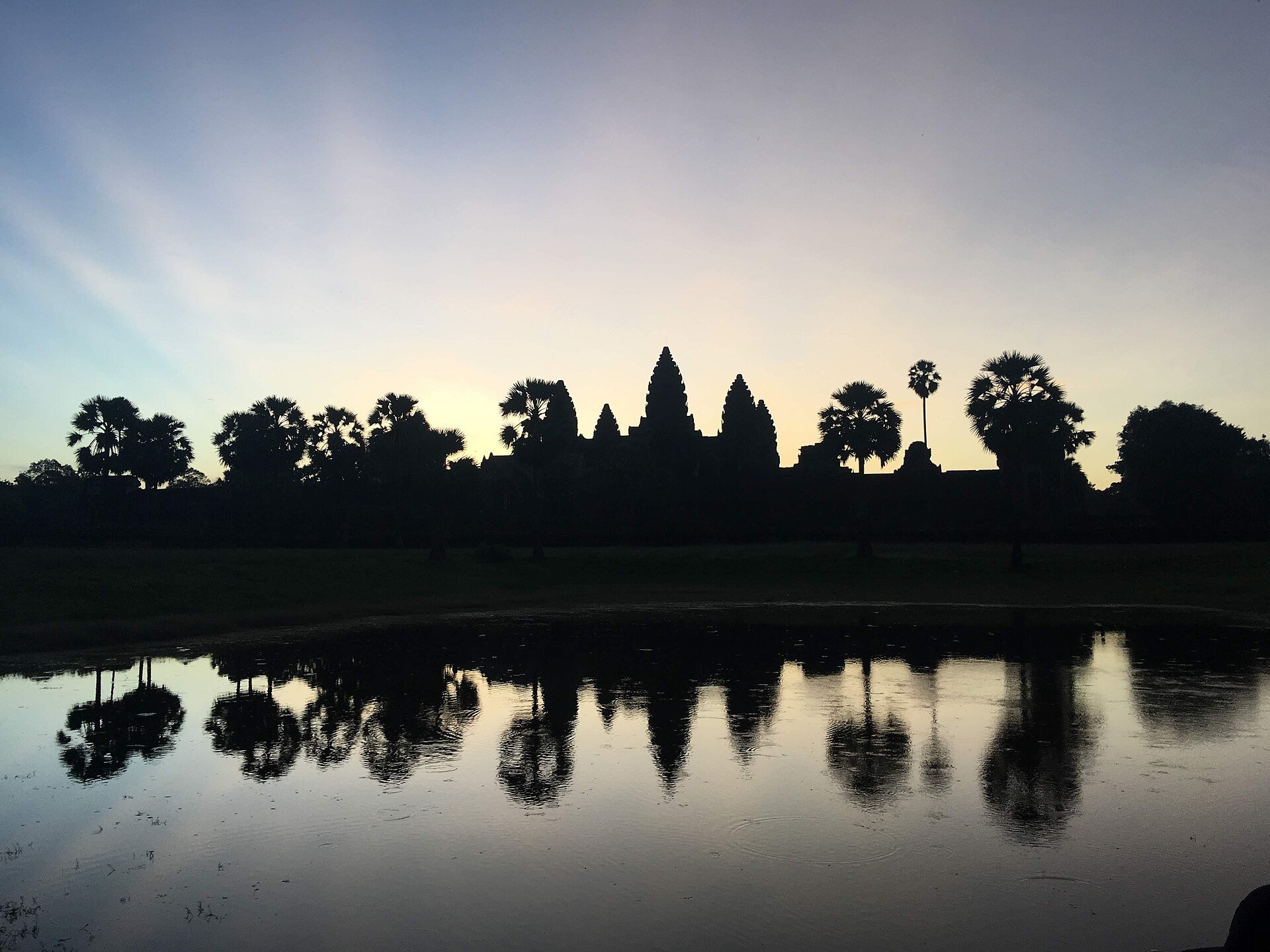
Key facts — Case File #073
- The place: Angkor Wat, Cambodia — the largest temple on Earth.
- The footprint: some 400 acres of stone inside its moat rectangle.
- The build: ten million stone blocks, floated 40 km by canal to reach the site.
- The anomaly: it faces west — backwards for a temple of its tradition.
- The mystery: no known original name; possibly built as its king's tomb as well as a temple.
Ten million blocks, delivered by boat
Stone that size doesn't walk to a building site. The blocks were floated roughly 40 kilometres by canal from the quarry — a river of rock, boatload after boatload, until ten million blocks had made the journey. Every guardian statue on the causeway, every carved gallery wall, started as cargo. The logistics alone would be a wonder. They're only the delivery system for the real puzzle.
It faces west — backwards
Temples in Angkor Wat's tradition face east, to greet the rising sun. This one faces west. Backwards. In the symbolism of the time, west is the direction of death — and that's where the case turns strange. A temple that faces the land of the dead, built at tomb-like scale by a king who would need one: researchers have long suspected Angkor Wat was designed to be two things at once, a temple for the gods and a tomb for its builder. The name that would settle it was never written down — or never survived. Temple, tomb, or both? The file stays open.
Frequently asked questions
What was Angkor Wat's original name?
Nobody knows. The largest religious monument on Earth was raised without leaving its name in any surviving record — "Angkor Wat" is simply what it came to be called later.
Why does Angkor Wat face west?
Temples of its tradition face east, toward the sunrise. Angkor Wat faces west — backwards. West is associated with death, which is one reason researchers suspect the temple was built to double as its king's tomb.
How were Angkor Wat's stones transported?
By water — the blocks were floated some 40 kilometres by canal from the quarry to the site. Ten million blocks, arriving by boat.
Keep exploring
- 🏛️ Kailasa Temple — the temple that was never built, only carved down
- 🗿 Easter Island — giant stone heads on the loneliest island on Earth
- 🏯 Ayutthaya: The City That Was Swallowed Twice